


(CN) - Apple's app store fees are under fire in the Netherlands after Europe's top court gave Dutch consumers the go-ahead to take the tech giant to court for overcharging them.
In its ruling Tuesday, the EU's Court of Justice made one point clear: When pricing practices affect consumers across an entire national market, companies cannot use procedural nuances to argue against judicial scrutiny.
The judges in Luxembourg said that when potentially anticompetitive behavior impacts consumers across an entire country - as Apple's app store fees are claimed to have done in the Netherlands - the whole market counts as one place where the harm occurred.
That means a single Dutch court can take on the case for all affected users, making justice more practical and predictable by avoiding a maze of regional lawsuits over the same issue.
The two Amsterdam-based consumer advocacy groups, Stichting Right to Consumer Justice and Stichting App Stores Claims, were created to challenge unfair market practices and defend users.
They filed the 2022 lawsuit with the District Court of Amsterdam on behalf of Dutch iPhone and iPad owners, claiming the company exploited its control over the Dutch app store by charging developers up to 30% commission on every app sale or in-app purchase, a surcharge that ultimately drove up costs for consumers.
Apple pushed back, arguing that Dutch judges had no business hearing the case. The company said any harm happened in Ireland, where its European headquarters sits, and that even within the Netherlands, only local courts in the cities where users made their purchases should be involved.
Faced with that dispute, the Amsterdam court turned to Europe's top judges in Luxembourg for guidance on how far jurisdiction can go. At the heart of the question was a simple issue with big consequences: When a company's actions ripple through an entire country, which court gets to take the case?
The judges in Luxembourg didn't buy Apple's argument. They said the company's App Store Netherlands - a fully localized platform where people pay in euros through Dutch banks - clearly targets the entire national market.
Because of that, the court said, the overcharge may be considered "to occur in that territory, irrespective of the place where the users concerned were located at the time of the relevant purchase."
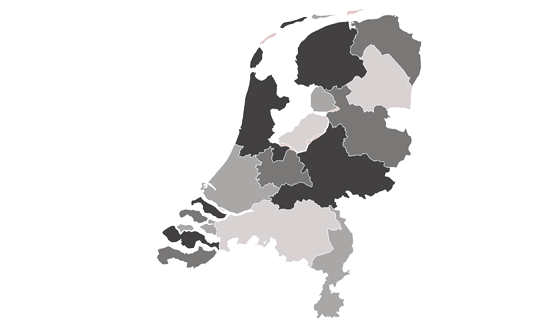
The point wasn't just convenience but coherence. Dutch consumers won't have to scatter their claims across 11 different courts. Instead, Dutch judges across the country share the power to hear the case, meaning consumers aren't tied to one venue or forced to file region by region.
Instead of tying the claim to specific regions, the court emphasized, the system should function as one unified market where collective actions can move forward efficiently and consistently.
Legal scholars said the ruling defines where harm occurs for users of national online platforms but leaves open harder questions for global ones.
Gilles Cuniberti, a law professor at the University of Luxembourg, noted that the court resolved "an easy case" because Apple's Dutch app store was set up for one national market, but "did not address how it would define the place of damage for a platform not limited to a single state."
He added that while the judgment makes representative actions easier within one country, "many questions remain for more complex cross-border cases."
The ruling also clarified how Europe's growing system for class actions fits within the EU's cross-border rules. The judges explained that the two Dutch foundations filed the case under their own legal mandate to defend the collective interests of a clearly defined group of users, rather than acting as stand-ins for individual consumers.
In cases like this, they said, national courts don't have to track down where every single user was affected - it's enough to show that the harm was felt across one national market.
Legal experts said the decision could reshape how collective redress works in Europe, both by clarifying jurisdiction and by testing the limits of EU procedural law.
Geert van Calster, professor of private international law at KU Leuven, said the ruling makes sense from a practical standpoint, since it's "more realistic to sue a company the size of Apple in one place rather than across the whole of the Netherlands."
But he cautioned that while consolidating claims in one court can improve efficiency, the judges "may have stretched existing EU procedural law to achieve a fair outcome," arguing that "it is for legislators, not the court, to rewrite them."
Others viewed the judgment as a milestone for strengthening access to justice. Xandra Kramer, professor of private law at Erasmus University Rotterdam, called it a major step forward for consumer class actions in the Netherlands and beyond.
She noted that without it, "qualified entities would have to bring different cases in multiple Dutch courts," making collective redress nearly impossible.
Kramer added that the ruling supports the EU's goal of ensuring "sound administration of justice" and comes as Brussels reexamines its rules around jurisdiction and private law.
Apple said it did not agree with the ruling, emphasizing that it's only jurisdictional, and noted that it will continue to defend its position in the Dutch case.
The two Dutch foundations that filed the suit did not respond to requests for comment.
The case will now return to the Amsterdam District Court, which will pick up where it left off and decide whether Apple must face the collective lawsuit on its merits - a decision that could shape how Europe handles consumer claims in the digital marketplace.
Courthouse News reporter Eunseo Hong is based in the Netherlands.
Source: Courthouse News Service