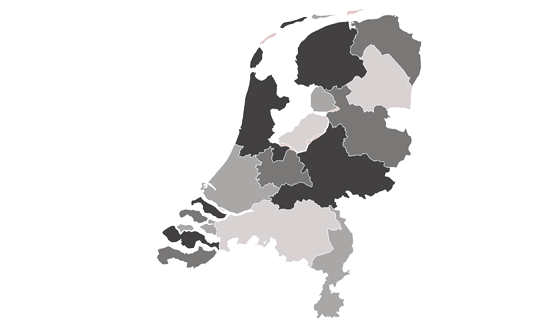


With negotiations ongoing between leading parties including the Democrats 66 (D66) and the Christian Democratic Appeal (CDA), observers are watching for signs of a more balanced approach tomigration, after years of heated rhetoric and restrictive measures.
Changes in the Dutch political landscape have coincided with the launch, earlier this month, of the European Commissions first Annual MigrationManagement Cycle, under thePact on Migration and Asylum.
This EU initiative aims to enhance coordination among member states on migration management, asylum procedures and integration efforts.
The European Commission regardsthe Netherlandsas one of the countries at risk of "experiencing migratory pressure" butdescribes the situation as showing "a continued improvement".
'Relatively stable'
Myrthe Wijnkoop, senior policy advisor at the Amsterdam-based refugee charityVluchtelingenwerk, agrees that despite the heated political debate, the reality is quite different.
Asylum applications in the Netherlands have remained "relatively stable" over the past decade, she says.
UN accuses France of 'serious violations' of the rights of child migrants
According to the UNHCRRefugee Data Finder, there are 262,974 refugees and asylum seekers in The Netherlands including 46,900 asylum seekers who have made their applications this year.
Notable surges in these numbers such as the Syrian refugee peak in 2015-16 and the influx of Ukrainians in 2022 under a special temporary protection scheme highlight that "geopolitical events, not domestic rhetoric" primarily drive refugee flows, according to Wijnkoop.
"Theres a quite stable number of persons coming every year," she explains, adding that the political framing of a "crisis" is misplaced. "People dont choose where they go, they leave because of persecution and violence, not because of facilities."
UK toughens asylum system with radical overhaul
'Left in limbo'
However, problems remain: the country's reception centres are overcrowded and asylum procedures often take more than two years to commence.
During this period, asylum seekers face restricted rights and profound uncertainty. "Waiting times and shortages of decent housing and facilities... its a big problem," says Wijnkoop. "People are left in limbo. If you imagine when you just cant do anything the whole day but just wait... Its devastating for peoples mental health."
Attempts to distribute responsibility for asylum reception evenly across Dutch municipalities, embodied in recent legislation, have come up against local resistance and political hesitation.
However, Wijnkoop remains cautiously optimistic, saying: "If the next government is upholding that legislation and is promoting the execution thereof, it can be a success."
The PVVs defeat is in contrast with therising influenceof Marine Le Pens far-right National Rally (RN) in France, where there were 751,218 asylum seekers and refugees registered in 2025, including 77,412 new asylum claims. Waiting times for these to be processed under the French system currently exceed eight months.
The French government under Emmanuel Macron has pursued reforms aimed at tightening asylum procedures and increasing deportations, positioning asylum increasingly as a matter of national security rather than humanitarian protection.
Originally published on RFI