


(CN) - Seventeen years after a Dutch cameraman was killed covering the 2008 war in Georgia, Europe's human rights judges said Tuesday that Russia still hasn't answered for the missile strike that took his life.
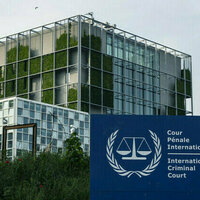
The court found that Russian authorities "took no meaningful steps to clarify the circumstances of the incident, and limited their response to general denials and requests for further evidence." By brushing off the case and never digging into what happened, the judges said, Moscow failed its basic duty to investigate how a civilian journalist was killed in a war zone.
Stanislaus Storimans, who worked as a photojournalist for Dutch broadcaster RTL, was filming the final day of the five-day war on Aug. 12, 2008, when a missile tore through Gori's central square. He was killed instantly, and his colleagues, Dutch journalist Jeroen Akkermans and Israeli reporter Tsadok Yecheskeli, were both badly wounded.
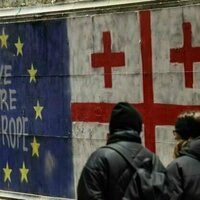
The 2008 war between Georgia and Russia erupted after months of rising tension over South Ossetia, a breakaway region backed by Moscow but claimed by Tbilisi.
Late on Aug. 7, Georgian forces tried to retake the area, sparking a swift and overwhelming response from Russia. Its troops poured in through South Ossetia and Abkhazia, supported by air strikes and the Black Sea fleet. The fighting quickly spread to nearby Gori, deep inside Georgia, forcing Georgian soldiers to pull back. By Aug. 12, the European Union had brokered a ceasefire - the very day Storimans died.
A Dutch government investigation later concluded that "the strike in Gori had been carried out using a 92-cm Iskander missile (also known as SS-26 Stone) carrying cluster munitions," noting that the weapon "was only found in the armory of the Russian Federation." Investigators also noted there were no Georgian troops near the square when the missile hit.
Reports from the time backed up the Dutch investigation. A 2009 Human Rights Watch study and an EU fact-finding mission both found that Russian cluster munitions hit Gori's central square, killing civilians even after Georgian forces had already pulled out.
Despite those findings, the judges said the court couldn't hold Russia directly responsible for what happened during the five days of fighting because the chaos of active warfare made it impossible to say any one side had real control over the area. What the judges did find, however, was that Russia didn't conduct a meaningful investigation afterward.
That uncertainty over who held control on the ground has long complicated the court's approach in wartime cases. Kushtrim Istrefi, associate professor of public international law and human rights at Utrecht University, said the ruling reflects that challenge, noting that "the court was struggling to understand, because of the context of chaos, who killed whom and who did what," he said, noting that evidentiary gaps limited the judges' ability to assign direct responsibility.
Annick Pijnenburg, assistant professor of international and European law at Radboud University, added that the judgment follows the court's familiar reasoning on extraterritorial jurisdiction. She said it was "remarkable and presumably unsatisfactory for the applicants that Russia is not found to be responsible for the killing itself," even as the court reaffirmed Moscow's duty to investigate.
The judges also revisited earlier cases where the court had examined Russia's conduct in other wars, stressing once again that a country's obligations do not end when the fighting stops and that it must still investigate civilian deaths.
Grigor Avetisyan, legal and advocacy consultant at Stichting Justice Initiative, which represented the applicants, said the court's decision "regrettably" followed earlier rulings on the 2008 war despite detailed evidence from the Dutch government. He added that the judgment reaffirmed Russia's duty to investigate but "leaves unanswered the broader question of accountability for journalists and civilians killed during those crucial days of the war."
The judges ordered Russia to pay compensation, awarding 10,000 (about $11,600) to Storimans' wife and two children together, and another 10,000 (about $11,600) each to the two injured journalists.
Even though Russia withdrew from the Council of Europe in 2022, it remains legally bound to pay compensation for violations that occurred beforehand.
Lize Glas, associate professor of international and European law at Radboud University, said even though the ruling is legally binding, "it is unlikely that Russia will comply with these obligations." She pointed out that since quitting the Council of Europe in 2022, Moscow has stopped engaging with the organization altogether and even passed a law refusing to enforce any judgments that became final after its withdrawal.
Russian authorities did not respond to Courthouse News' request for comment.
The ruling is not yet final, as either side can ask for a referral to the court's Grand Chamber within three months. If no appeal is made, it will stand as the court's last word on the case.
Courthouse News reporter Eunseo Hong is based in the Netherlands.
Source: Courthouse News Service