


THE HAGUE, Netherlands (CN) - For half a century, the Netherlands has lived with a contradiction. Any adult could walk into a coffeeshop, order a joint and light up under the tolerant gaze of the law.
Just don't ask where that cannabis came from - that's where things got illegal. Though retail sales were tolerated, largescale production and distribution were not. Policymakers and scholars called it unsustainable and "the backdoor problem." Criminals called it profitable.
"This policy contradiction has effectively operated as a subsidy program for organized crime," Robin Hofmann, an associate professor of criminal law and criminology at Maastricht University, said in an interview.
Now, mirroring the arrangement seen in many places where marijuana has been legalized, the Netherlands is experimenting with a market that's fully legal from seed to sale.
Known as the Controlled Cannabis Supply Chain Experiment, the program lets a small group of licensed growers legally supply coffeeshops, closing the long-criticized gray-market "back door."
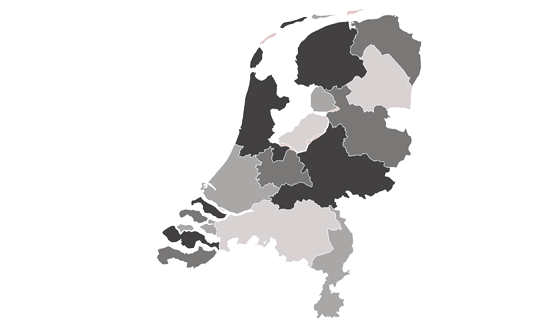
After flipping the switch on April 7, every gram of cannabis sold in cities like Tilburg, Breda, Nijmegen and Groningen now comes from a legal, bar-coded, tracked-and-traced supply chain.
Hashish came later. Coffeeshops kept selling hash from existing sources through the summer, after officials delayed enforcement because the initial legal hash supply wasn't yet sufficient in quality and quantity. The market switched to exclusively legally produced hash on Sept. 1.
Just like that, a country long known for its laid-back but gray-market coffeeshop culture started running one of the world's most closely watched legalization pilots - not a symbolic tweak, but a full test of what happens when a country finally legalizes the back door as well as the front.
It may not seem like a big deal from the United States, where many states now have legal cannabis markets. It is for Europe, where marijuana laws can be relatively lax but there is no truly legal commercial industry.
Instead, Europe has long operated from a messy gray area in the middle, with the Netherlands' legal-but-not-quite market perfectly capturing that ambiguity. That approach has some benefits - unlike the U.S., Europe has never had large numbers of prisoners serving hard time for nonviolent marijuana offenses - but there are also obvious problems with allowing illegal markets to grow unchecked, as the Netherlands has effectively done for years.
With its experiment, the Netherlands is testing if "legal supply can push back illicit supply chains," Hofmann said. While he stressed the EU is unlikely to sign off on full national legalization anytime soon, he said the Dutch pilot was scientifically invaluable, provided big commercial players don't end up shaping the results.
What's striking about the first months of this pilot program is what didn't happen. No chaos, no spikes in public nuisance. Except for more stringent regulations at the coffeeshops themselves, hardly anything has actually changed about daily life in the country.
In comments to Courthouse News, officials in both Groningen and Breda said the shift to a legal market had gone more smoothly than expected. Tilburg officials were a bit more cautious, saying it was "too early to draw conclusions." Nijmegen faced perhaps the steepest learning curve - but even there, the issues were more about the supply chain problems with licensed growers, rather than a breakdown in public order.
At FYTA Company, a licensed grower based in Waalwijk that's authorized to supply coffeeshops in participating pilot municipalities, CEO Fred van de Wiel said the rollout has gone far more smoothly than many assumed it would.
"Production and distribution are going very well," he said, crediting government agencies for stepping in quickly to address any hiccups.
For coffeeshops, van de Wiel said cutting ties with black-market supply chains had brought a sense of relief. They "never want to go back to the old system," he said.
And yet even this tightly regulated chain has blind spots, parts of the market that continue to operate on the margins and outside the law.
The biggest gap concerns hash - specifically, Moroccan hash. It accounts for roughly a fifth of Dutch consumption but remains largely outside the Netherlands' legal framework, which currently prohibits imports.
Some experts cite this gap in particular as something that will need to be addressed. Pien Metaal, a senior researcher with the Transnational Institute think tank in Amsterdam, said many consumers prefer Moroccan hash to the legal Dutch-made substitutes, which are "much stronger, more expensive, have high THC and lack CBD."
By leaving Moroccan hash out of the legal supply chain, Metaal added, officials are also excluding North African farmers, many of whom have deep ties to the Netherlands. It all gets back to the central logic of this pilot program: If Dutch officials can't find a way to bring cannabis into the normal economy, they may have to continue contending with black markets.
The Netherlands' rollout of legal cannabis markets may be surprisingly calm on the street, but the research side is far from settled.
As part of a four-year monitoring project, policy and health researchers at groups like the Trimbos Institute, RAND Europe and Breuer Intraval are now sifting through the data, studying everything from crime and public order to health and buying habits. They're comparing that against data from 2022, something of a control group from before this pilot program.
The first meaningful assessment of the experiment's effects is not expected until mid-2026, meaning most of what we know today is still just the opening chapter.
"It is still too early to say anything about effects," said Margriet van Laar, head of drug monitoring and policy at the Trimbos Institute, a national agency that tracks drug use and mental health.
Still, some research is already underway. Ahead of the experimental phase, Trimbos ran a baseline contaminants study, testing cannabis sold in both intervention and control municipalities for pesticides, heavy metals and other substances. The analysis will be repeated later to assess how regulated products compare.
Another area of research is the question everyone quietly worries about: How young people perceive these changes. Early signals show no dramatic swing in youth risk perception, but upcoming surveys should offer a clearer view.
Yet another big question - one that policymakers in particular care about - is whether this whole experiment actually squeezes out the illicit market, versus creating two systems.

Alas, that may be the trickiest question to answer.
Toine Spapens, a criminology professor at Tilburg University, said the underground cannabis economy is tangled up in international criminal networks, making it difficult to draw neat before-and-after conclusions with this pilot program. Criminals can move between locations and substances to suit their needs, often following the path of the most profits for the least trouble.
A drop in crime in tightly regulated markets in Tilburg or Breda, for example, could mean the black market is getting smaller - or that it's simply moving to other places. Meanwhile, Spapens notes that many illegal drug networks are "one-stop shops," with criminals moving not just marijuana but other drugs like cocaine and ecstasy through the same routes.
Beyond the Netherlands, it's also not yet clear whether this Dutch experiment will lead to broader change.
It's been celebrated in France, where reform groups like NORML France have highlighted the pilot project as proof that regulated adult access can work without putting kids at risk. The group says models like the Netherlands' show how legalization can benefit "health, social welfare and reduction of criminality." They contrast that with France's more punitive rules on cannabis, which they say "criminalize and penalize the consumer" and allow illegal markets to flourish.
In Belgium, which shares a border with the Netherlands, the reaction has been more muted. Belgium long had a complicated relationship with the Netherlands' cannabis markets: The substance remains fully illegal in Belgium, and yet the Netherlands views drug tourism from the country as an issue of public order, cracking down on it in border towns.
Daan Staes of CannabisKenners, a Belgian group that advocates for modernizing the country's cannabis laws, said the Dutch experiment "changes nothing" for Belgians in practice. Although Belgians can buy cannabis legally in the Netherlands, "the moment they cross the border, that fact officially ceases to exist," Staes said. He added that the pilot hasn't stirred much political debate in Brussels, even if some Belgians are now quietly smoking higher-quality Dutch cannabis.
Meanwhile, in the United States, some researchers see a mirror for cultural shifts already underway at home.
Iulia Fratila, an assistant professor of global and community health at George Mason University, said legalization sends a powerful signal to young adults that marijuana is no longer deviant but normal. National surveys in the U.S. show rising use among people aged 19 to 30.
"The gates have been lifted for young adults who might have been dissuaded by the criminal status," Fratila said. She worries that the commercial side of legal cannabis is racing ahead of science and public policy and warned that without stronger investment in research, public policy risks falling behind the pace of commercialization.

No matter what happens next, there's no doubt that the Netherlands is at a crossroads.
After the four-year pilot program and a possible 18-month extension, the clock will run out, and all participating Dutch cities will snap back to the old rules.
At that point, it will be up to the Netherlands' future government to decide on full national legalization. If Dutch officials can get the program to work without hitches, the country could become Europe's first fully legal, end-to-end cannabis market. If not, it could return to its old system of nebulous gray markets and underground suppliers. The Dutch Ministry of Health, Welfare and Sport told Courthouse News that "things are developing well," but the real judgment will come later.
For a country long associated with easygoing cannabis rules, it's remarkable that the Netherlands is only now tackling the contradictions behind its market.
Whether it becomes a global template or simply an academic case study depends on what happens between now and 2029. As Hofmann, the criminologist, put it, the entire experiment rests on one question: Can a legal supply chain displace an illicit one, not just on paper but in practice?
Courthouse News reporter Eunseo Hong is based in the Netherlands.
Source: Courthouse News Service