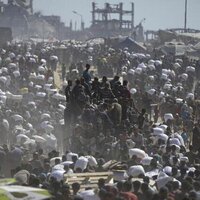


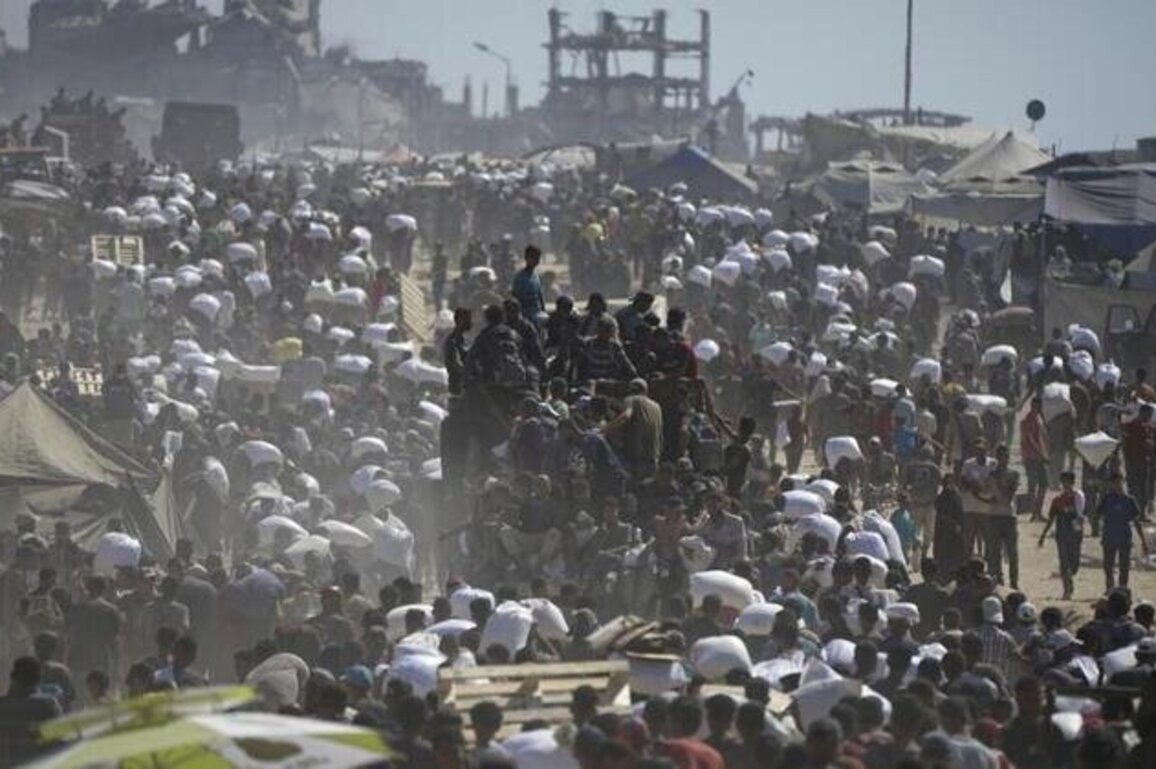
On August 22 this year, the Integrated Food Security Phase Classification(IPC) theUN-backed organisation considered an authority on food security declared in anofficial reportthat over half a million people in theGaza Stripare facing catastrophic conditions characterised by starvation, destitution and death. The report projected the famine would expand and warned that at least 132,000 children under five are expected to suffer from acute malnutrition through June 2026.
The official declaration of the entirely man-made famine by a globally recognised voice was one of the strongest indictments of Israeli Prime MinisterBenjamin Netanyahusgovernment since the start of the war sparked by the October 7, 2023 attacks. Unsurprisingly, the report's publication was met with a wave of condemnation.
Jeremy Konyndyk, the president of Refugees International called the famine a "staggering failure", sayingthat the Israeli and US governmentsbore primary responsibility.UNhumanitarian chief Tom Fletcherurged global communitiesto "read the IPC report, cover to cover. Read it in sorrow and in anger. Not as words and numbers but as names and lives.WHOchief Dr. Tedros Adhanom Ghebreyesu referred to the state of famine in Gaza as ahealth "catastrophe"that will last for "generations to come".
Israels stand on the matter was clear and firm: There was, and continues to be, no famine in Gaza.Israel imposed a total food blockade on theGaza Stripin early March, before lifting it at the end of May and authorising very limited food supplies and food distributions by the heavily criticised Gaza Humanitarian Foundation (GHF). UN humanitarian agencies had been banned from all activity in Palestinian territory for several months.
Israel, which has been widely accused of manufacturing a famine in Gaza asa weapon of war, denied the allegations in its official response and accused the IPC of misrepresenting data fora political agenda, with Netanyahus government taking the criticism a step further andaccusing the organisationof participating in a modern blood libel.
The IPC stood by its declaration andreleased materialto back up their claims (the IPC also used the same measuring tools and baseline criteria to declare famine inSudan).
Not much has changed since August, when the famine was first declared. According to US President DonaldTrumps 20-point plan, full aid was to be immediately sent into the Gaza Strip through neutral international institutions without interference from the two parties". Theoretically, this would have been the first step in mitigating the ongoing famine but the dealhas fallen short of its goals.
While the threshold to declare famine was officially crossed only this year, Gazans have been in a state of crisis for far longer. The first major reports that said Gaza was nearing famine were released meremonths into the war,in March of 2024.
Alex de Waal, executive director of the World Peace Foundation at Tufts University, and the author of several books focusing on famine around the world, says: Israel has never disputed food insecurity. The administration has been keeping Gaza in a state of hunger thats just a hair below a full-blown famine because that word famine would have repercussions for Israel.
Aid obstruction, starvation crimes, forced displacement, and attacks on health services featured prominently in aSeptember 2025 UN inquiry reportfinding that Israel had committed genocide against Palestinians in Gaza. Starvation crimes also formed a major part of the International Criminal Courts indictments againstNetanyahu. The Israeli government has dismissed each of these rulings.
Lets say that the Israeli interpretation of the data is correct. That food security in Gaza is a bit less than a full famine. What difference would that make?," says de Waal.
Starvation at the level declared by the IPC and other bodies is far more complex than a temporary state of hunger. Experts believe that famine could have far-reaching ripple effects that last for years, if not generations.
The biological legacy of famine
Experts have studied the long-term effects of similar cases in history from famine survivors fromIndiaandChinato the Holocaustto understand the potential outcomes of long-term famine in Gaza.
Starvation occurs, broadly, instages.
In the first stage, the body draws from glycogen stored in the liver to keep blood sugar levels stable. In the second stage, it shifts to gluconeogenesis feeding on muscle and fat to sustain the vital organs. When glucose begins to run out, a process called ketogenesis converts fatty acids into molecules that serve as an alternative fuel source. When the body runs out of fat, it breaks down its own proteins and, in a way, begins to consume itself. Muscles weaken, immunity plummets and the risk of deadly infection begins to rise.
Some die directly of starvation but many more die of starvation-related illness or infection. Childrens smaller bodies are especially vulnerable.
Malnutrition is another problem: even if the body receives enough calories to survive, the quality of those calories may not be sufficient to allow a normal functioning human body. According to the IPC,malnutritionencompasses the qualityand quantity of diet, care, water sanitation and hygiene.
Dutch researcher Dr. Tessa Roseboom has led groundbreaking research into the Dutch Famine a six-month long famine that took place in the German-occupiedNetherlandsduringWorld War II. Her research on the long-term consequences of prenatal malnutrition for almost 30 years shows that famine can leave a lasting imprint even on unborn foetuses.
I became fascinated by the human body at anIVFclinic, when I saw cells in a petri dish and realised oh, thats a human being!
Roseboom says that before her research it was widely believed that human beings at the cellular stage she saw in the petri dish needed little to survive.
Our research showed that wasnt true, because thats the stage when all the internal organs the heart, the lungs and the brain are being built. So in cases of famine, their structural integrity is compromised.
Famine can express itself later in life in higher rates of cardiovascular disease, diabetes, depression and more. Illnesses that normally show up later in life, like cognitive disorders, occur earlier in life.
The Dutch Famine lasted about six months, so its unknown whether longer exposure to famine as in Gaza would have worse effects. But Roseboom says that "it would make logical sense.
Her study also showed that foetuses could get epigenetic markers: tags on their DNA that affected the way their genes were expressed. The genetic code itself is not changed, but the expression of the DNA changes.
Those changes might explain why we pass on those diseases to the generations after, Roseboom added.
Healthy pregnant mothers also release enzymes that protect babies from stressors. But in famine, this enzyme decreases, so foetuses are exposed to stress hormones, so as adults theyre going to be much more sensitive to stressors.
The damage to the foetus cannot be erased or reversed, according to Roseboom, but it can be somewhat mitigated. Food safety has to come quickly, prioritising women and children.
The scientific evidence is clear. The repercussions will continue for generations, and Im incredibly worried about this generation and the next. As a global community, we have been unable to stop this, says Roseboom.
Famine as a complete societal collapse
Famine is the final stage of extreme food insecurity, and according tothe IPCs own criteria, it implies more than physiological starvation. Famine includes a breakdown of society at multiple levels of healthcare, clean water systems, sanitation and even social systems.
Roseboom says that aside from the clear physiological impacts, famine also expresses itself in the future with depression, lower participation in the labour market, increased mortality and a greater dependence on state benefits.
De Waal has studied the sociological effects of famine in a number of countries since the 1980s. He says that outside of the biological imprints, famine also leaves sociological markers on communities.
One of the commonly observed effects of mass starvation is social trauma. Its invisible, not spoken about and manifests itself in a variety of ways, says de Waal.
Catastrophic rates of famine, such as those seen in Gaza, lead to a marked increase in crime rates rooted in the fact that people are willing to go to far greater lengths to fulfil the biological basic need to eat and survive.
Citing the Bengal famine, de Waal says that experiencing starvation can lead to an increase in crime rates, and spiritual and social destruction that paves the way for inter-community violence.
Look in the aftermath of famine, and you will see bloodshed, he says.
Gazas own path to food aid has been riddled with distrust. TheGaza Humanitarian Foundation, an NGO that distributed food in the Palestinian enclave, was accused ofcomplicity in war crimes.
History shows that the long-term impacts of mass trauma has lasting consequences. Be it Leningrad,Cambodia, Bengal orSomalia, famine comes with intense humiliation and shame. Victims and survivors internalise the vision of themselves as subhuman. It can scar a society for life."
De Waal believes that siege starvation as a crime of societal torture can put a society under so much stress that it breaks human bonds.
The lay thinking is that starvation is a means of killing, but famine doesnt normally kill a population outright. Famine weakens the resistance of a population. It picks off children, pregnant women and the elderly first.
The men with guns are usually the last to go hungry. That creates a state where society turns against itself in a fight for individual survival. Its a complete breakdown of trust that rips the fabric of a community, says de Waal.
Originally published on France24