


(CN) - The Dutch government has for the first time used a Cold War-era national security law: It seized control of a private company because its Chinese owners were deemed a threat.
The Dutch Ministry of Economic Affairs said this week it had taken the "highly exceptional" move to apply the 1952 Goods Availability Act in seizing control of Nexperia, a semiconductor manufacturer purchased by Chinese tech giant Wingtech Technology in 2018 for $3.6 billion from the Dutch consumer electronics conglomerate Philips.
In the rebuilding after World War II, the 1952 law was designed to safeguard Dutch industries vital to the national interest. But the statute sat untested on the books until now, as the world sees a new Cold War-style rivalry between the U.S. and China intensify - and forces the European Union to take Washington's side.
"This is the first time that a drastic measure like that has been taken," said Rogier Creemers, a scholar of Chinese technology policy at Leiden University, speaking by telephone. "To a very significant degree, we are very much in uncharted territory in terms of what is unfolding here between China and other major technological players."
The takeover can be seen as part of a so-called "chips war" between the United States and its Western allies and China for control of advanced semiconductor technology - the tiny, complex microchips that power everything from smartphones and AI systems to missiles and data centers.
Alicia Garcia-Herrero, an economist and China expert at Bruegel, a Brussels think tank, said the seizure marked "a bold escalation in global tech tensions."
The Netherlands, a leader in semiconductor manufacturing and lithography machines, is a strategic chokepoint in the U.S.-China tech war, and had already been dragged into the conflict before Nexperia's takeover.
In 2023, the U.S. pressured the Netherlands into blocking ASML Holding, a Dutch multinational corporation and one of Europe's largest technology companies, from selling its extreme ultraviolet lithography machines to China. The Netherlands and U.S. cited security concerns for blocking the sale of EUV machines, which are required for manufacturing advanced semiconductors.
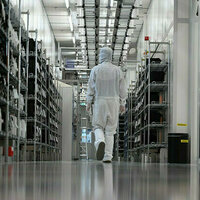
Compared to ASML, Nexperia is a much smaller company and far less critical for semiconductor manufacturing. It produces chips used in cars, industrial machines and consumer electronics. While it does not make leading-edge semiconductors, its products are vital for Europe's manufacturing supply chain, particularly the automotive sector.
Nexperia is based in Nijmegen, a city in the heart of Europe's semiconductor corridor built around the phenomenal success of Philips, the Eindhoven-based electronics giant that dominated Europe's postwar consumer-electronics market and spawned cutting-edge semiconductor production.
Creemers said he expected the U.S.-China tech rivalry to intensify, bringing with it serious risks.
"This is going to get a lot worse before it's going to get better," he said. "We are in a struggle for the commanding heights of the future division of income where the question is what are going to be the big value-added economic activities of the future and who is going to own them."
He said Chinese-owned companies across Europe would take heed of what's happened to Nexperia.
"I'm quite sure that there's been a lot of billable hours that have been made by sanctions law experts over the last 48 hours," he said. "There's going to be a very big compliance factor that companies now have to start thinking about."
The takeover of Nexperia was linked to Washington's decision last year to place Wingtech, one of China's largest electronics manufacturers, on its "entity list" of Chinese-owned companies seen as a threat to national security. Entities on the list face trade restrictions, such as a ban on U.S. technology transfers. Wingtech was accused of helping China acquire "sensitive semiconductor manufacturing capacity critical to the defense industrial bases of the United States and its allies."
The restrictions were expanded on Sep. 30 to include subsidiaries of companies on the list, and that left Nexperia facing trade restrictions by the end of November.
Under such conditions, Nexperia may not be able to do business with U.S companies, leaving it effectively unable to continue operating. What happens next is highly unclear, but Washington may opt to lift trade restrictions following the takeover of Nexperia's operations in the Netherlands.
Under the Dutch emergency order, Nexperia's Chinese chief executive Zhang Xuezheng was suspended from his duties and control of the company's management was handed to a government-appointed overseer.
The firm, which employs more than 1,800 people in the Netherlands, will continue operating but now falls under direct supervision of the government. Ownership of the company, however, does not change, Creemers said.
The Dutch government cited "serious governance shortcomings" for its decision, but did not provide details. Dutch media, citing official sources, have claimed Wingtech was transferring critical business and technology information to China and considering closing its Netherlands operations.
The government said its action was meant to "prevent a situation in which the goods produced by Nexperia (finished and semi-finished products) would become unavailable in an emergency."
"Losing these capabilities could pose a risk to Dutch and European economic security," the government said. "Nexperia produces, among other things, chips used in the European automotive industry and in consumer electronics."
Wingtech denounced the decision as politically motivated and vowed to challenge it through all legal and diplomatic means.
The seizure infuriated the Chinese government with its Foreign Ministry spokesman Lin Jian on Monday calling on the Netherlands to refrain "from politicizing trade issues" and accused it of violating "market principles." He called the seizure "discriminatory." By Tuesday, China had imposed an export ban on Nexperia's China-based operations.
Garcia-Herrero said, in a briefing note, the Nexperia takeover would heighten EU-China trade war fears, erode investor trust and highlighted "U.S. sway over European autonomy, potentially deterring foreign investments" in Europe.
She said the takeover may bolster Europe's "short-term supply resilience" in the chips market, but risks prompting China to retaliate with countermeasures that could hit ASML and worsen supply chain fragmentation, raising costs and slowing innovation.
"While fortifying sovereignty, it gambles with retaliation that could undermine Europe's competitiveness in a market dominated by Asia," she said.
Courthouse News reporter Cain Burdeau is based in the European Union.
Source: Courthouse News Service